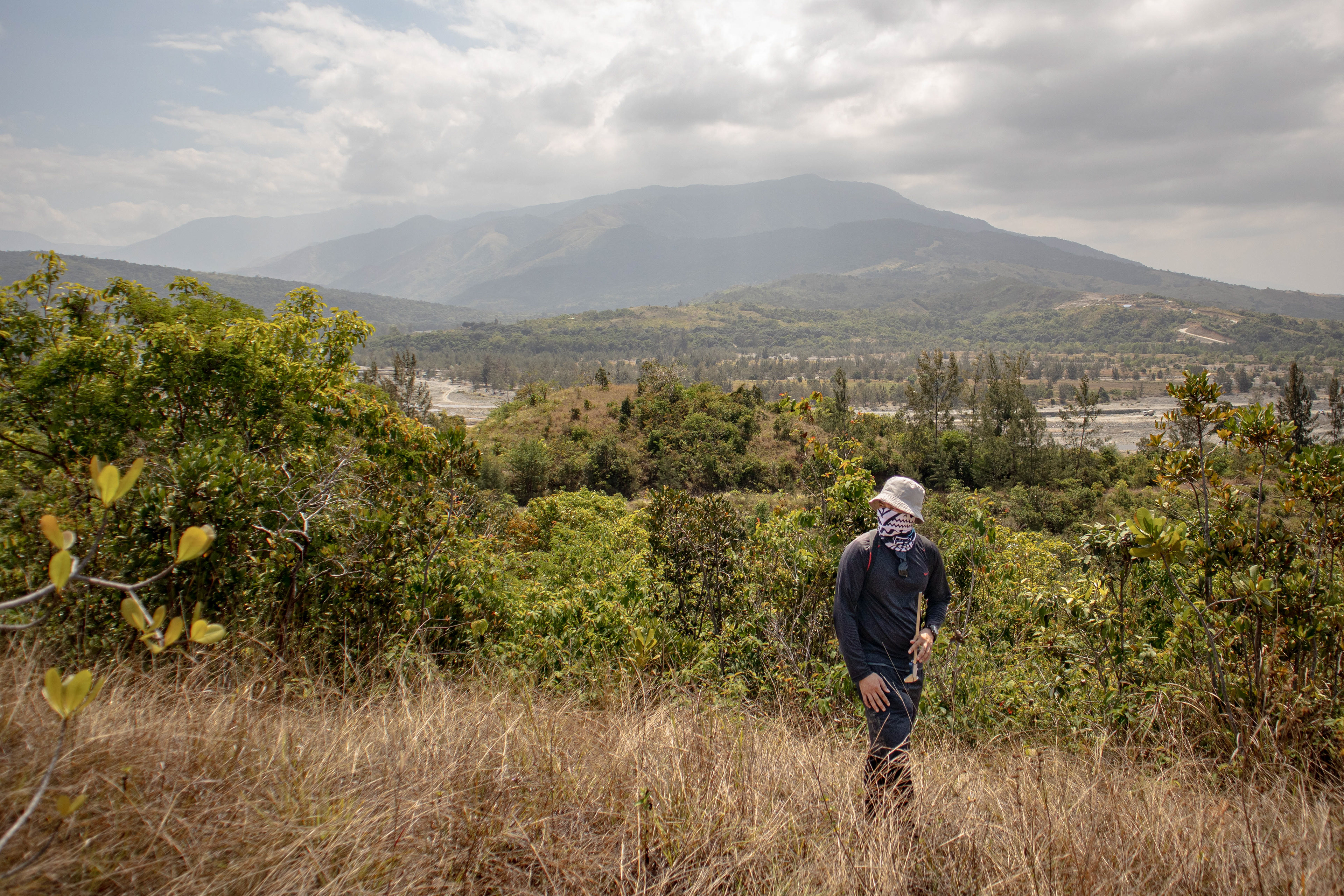
SANTA CRUZ, ZAMBALES - A forester scans the area for planted trees under the scorching heat of the sun.
For centuries, forests shaped the ecological foundation of the Philippines. They protected watersheds, moderated floods, sustained biodiversity, and supported the livelihoods of countless communities. Historical estimates suggest that in the 1500s, forests covered more than 27 million hectares of the country. By 2022, that figure had declined to around 7.22 million hectares.
The reasons are complex and cumulative. Commercial timber extraction, agricultural expansion, infrastructure development, and illegal forest clearing have all contributed to long-term forest loss. In response, the Philippines has launched multiple reforestation efforts across different decades, each reflecting the growing recognition that healthy forests are essential to national resilience.
Among the most ambitious of these efforts is the National Greening Program (NGP), the largest coordinated reforestation initiative in the country to date. With a target of planting 1.5 billion trees across 1.5 million hectares, the program represents a major national commitment to restoring degraded forestlands.
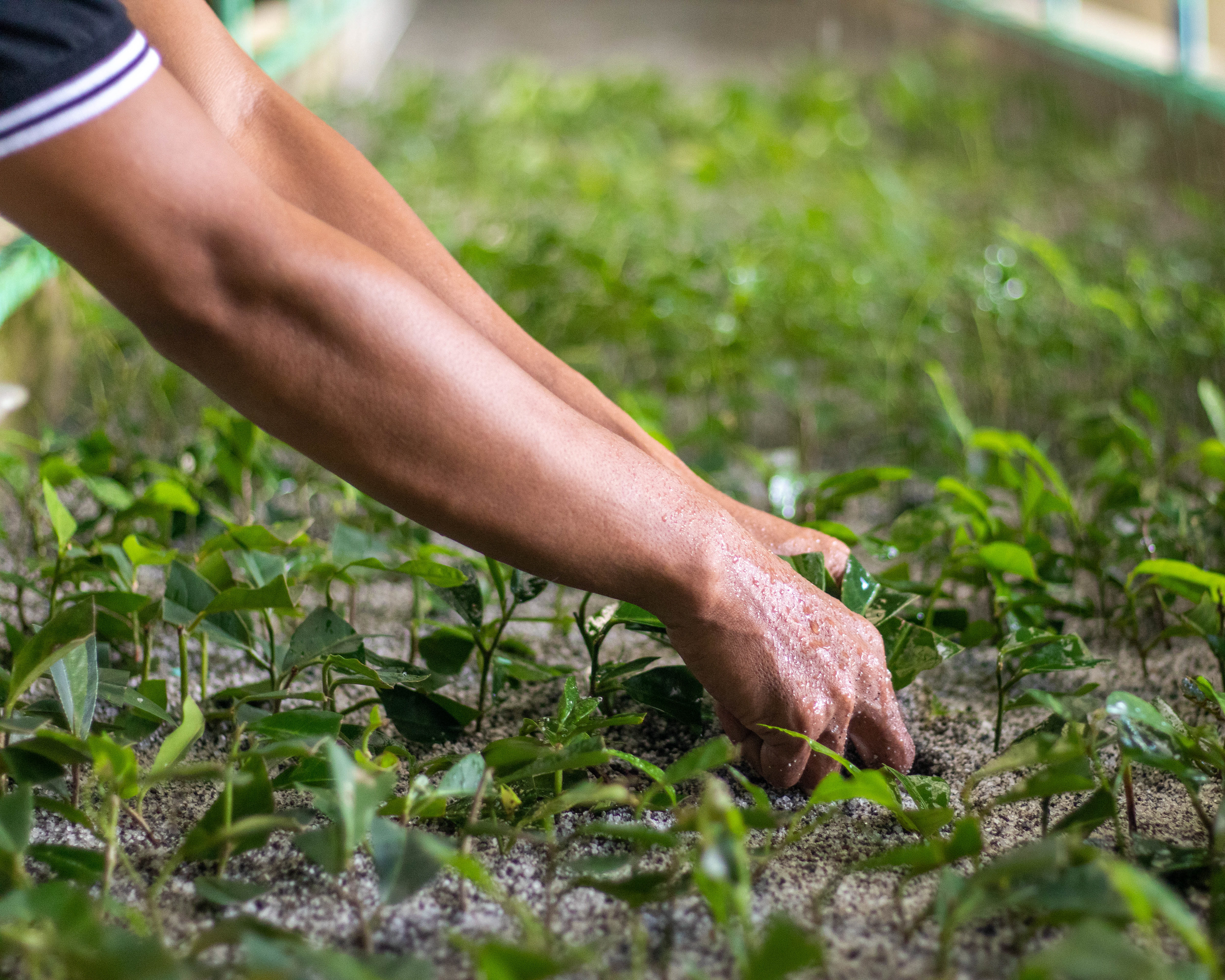
LOS BAÑOS, LAGUNA - Hands tend bignai (Antidesma bunius) cuttings inside a propagation chamber. After 6–12 months of growth, these cloned seedlings will be transplanted to National Greening Program restoration sites across the country.
Yet forest recovery is about more than planting seedlings.
Across the country, landscapes differ sharply in climate, soils, topography, and community needs. A strategy that works in one province may struggle in another. Areas exposed to prolonged drought, repeated typhoons, fire risk, or difficult terrain often require flexible approaches that respond to local realities. In many places, project success also depends on long-term cooperation with communities whose livelihoods are directly tied to the land.
This means restoration is not only an ecological task—it is also a social one.
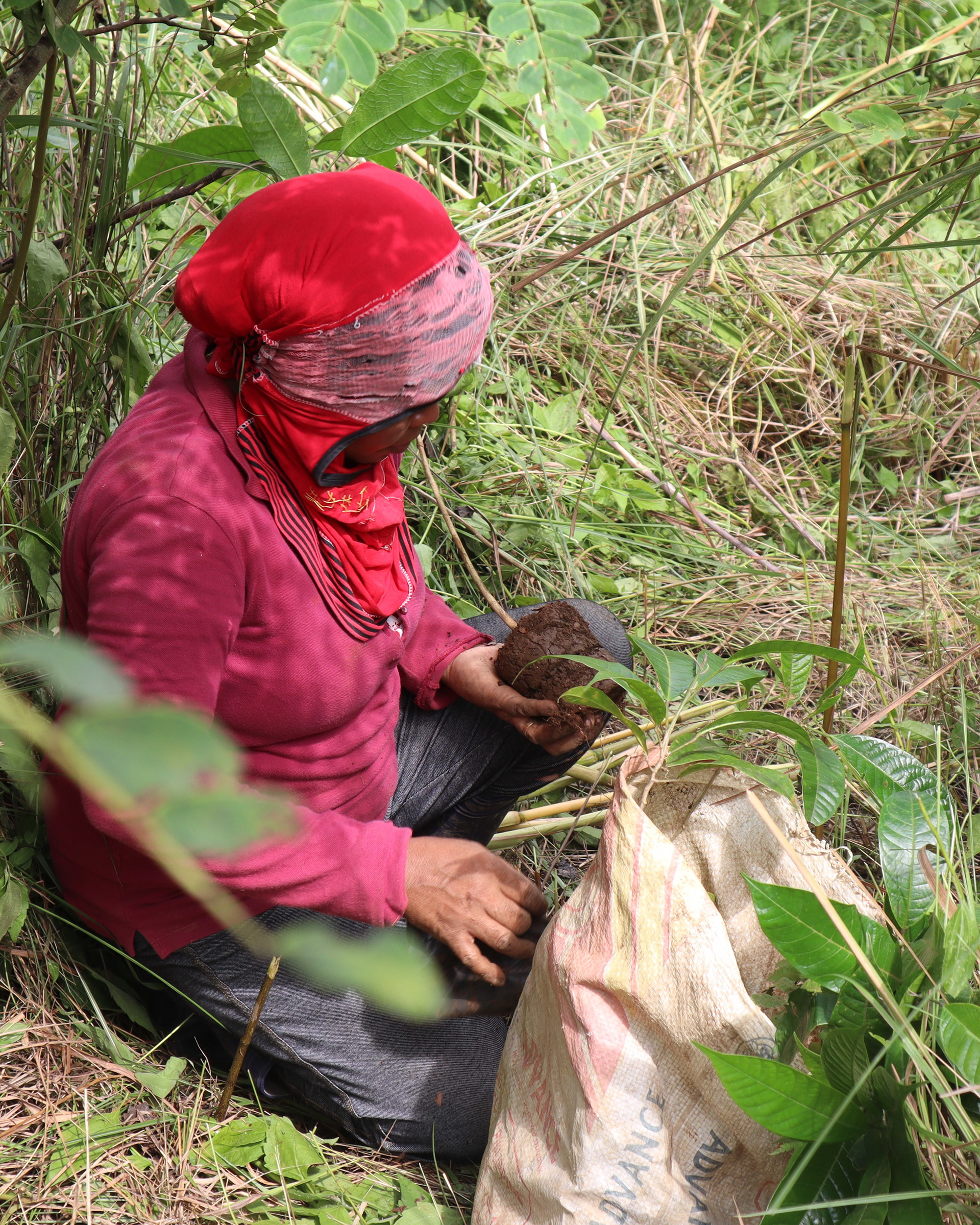
FORT MAGSAYSAY, NUEVA ECIJA - A worker prepares seedlings for planting at a reforestation site, where forest recovery depends on sustained labor long after ceremonial tree-planting days end.
Where communities trust the process, participate in planning, and benefit from outcomes, forests have a stronger chance of recovery. Where systems become too rigid or disconnected from field realities, implementation can become more difficult despite good intentions.
The next chapter of forest restoration in the Philippines may depend on shifting from a single model of tree planting toward more adaptive, science-informed, and community-centered approaches. Evidence-based planning, site-specific strategies, and consistent partnership with local stakeholders can help ensure that restoration investments lead to healthier and more resilient forests.
Because in the end, restoring forests is not measured by how many seedlings are planted in one season—but by how many forests are still standing decades later.
Sources: DENR-FMB, Global Forest Watch